There are certain details you intentionally try to memorize.
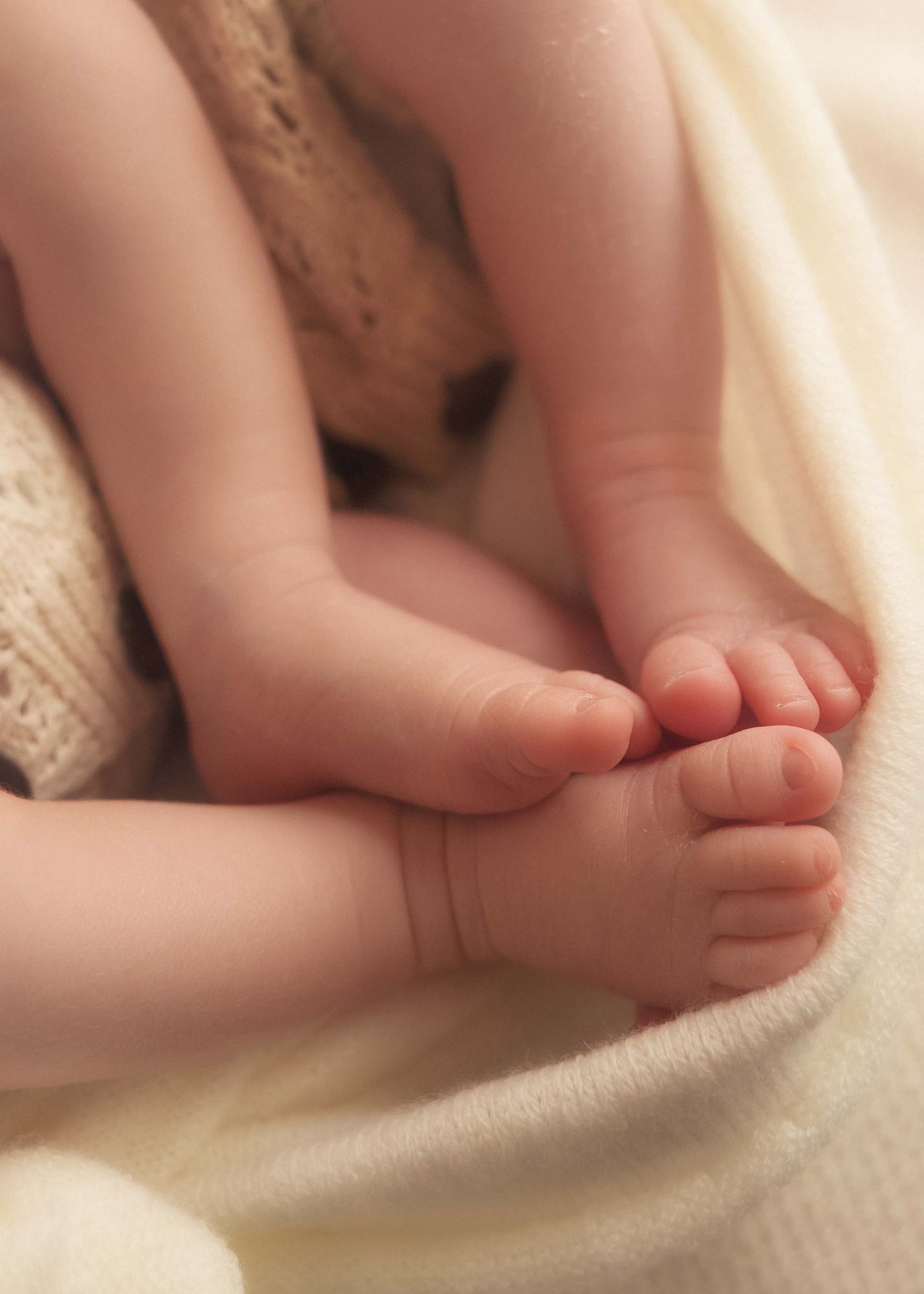
The curl of a newborn's fingers. The tiny wrinkles across their feet. The soft crease beneath their chin. The roundness of their cheeks when they are still so wonderfully chubby.
You look at them and think, 'I will remember this.'
And you probably will.
But not quite the way you think you will.
Because somehow, even the things we try so hard to remember become softened by time. You remember that they were tiny, but you forget how tiny. You remember their chubby hands, but not exactly how they looked tucked against their body. You remember the wrinkles in their skin, but forget just how much they had.
Children change so gradually that we don't always notice what we are losing.
One day they are impossibly small, and then they're not.
Their feet stretch out. Their fingers lengthen. The roundness of their cheeks begins to change. The little creases disappear.
And sometimes it takes a photograph to remind us:
Oh. They really were that small.
Maybe that's one of the reasons I love photographing the details.
Because the details are often the things we are most certain we'll remember—and the very things we are most likely to forget.
We think we're photographing tiny fingers and wrinkled feet.
But really, we're trying to hold onto a moment that is already leaving us.
---
When you strip life down to what matters most, so much of it comes back to this: the way we experience one another.
The people we love. The people who know us. The people whose hands have held ours, sometimes literally and sometimes in ways we don't recognize until much later.
There are moments when the brevity of life comes into clear view.
Moments when, for just a second, you catch a glimpse of the vanity of all our running to and fro—the striving, the accomplishing, the accumulating—and recognize that none of it can satisfy us in the way we thought it would.
And in those moments, our relationships come into front view.
We remember what is actually important.
To be known.
To be loved.
To belong to one another.
There is something profound about the dignity we've been given as human beings: to be seen by our Creator, and to be invited to participate in His work as co-creators.
We have been given an extraordinary amount of strength.
And yet we are so fragile.
Maybe that's part of the beauty.
---
I find myself especially drawn to hands.
To the lines of a hand that has lived a long life. A hard life. A faithful life.
There are stories written there that don't require a face.
I've never had the opportunity to photograph the hands of several generations together, but it is something I hope to do someday.
I imagine a grandmother's hand beside her daughter's, beside her child's—the differences in their age and experience telling a story all on their own.
I love the thought of what those hands could communicate without a single word.
There is strength in the lines of a hand that has been made fragile by the hardness of life.
Not physical strength.
Something quieter.
The strength of having endured. Of having learned. Of having carried something difficult and continued forward.
Perhaps that is one of the ways wisdom is passed from one generation to the next—not always through words, but simply through the evidence of a life that has been lived.
I imagine those lines saying something to the generation that comes after:
"I have lived. I have endured. I am still here."
And perhaps, without ever speaking, they tell the next generation:
"Hard can be overcome."
---
Maybe that is why I am so drawn to the small details in newborn and motherhood photography.
Because the details are never really just details.
A baby's curled fingers are evidence of how small they once were.
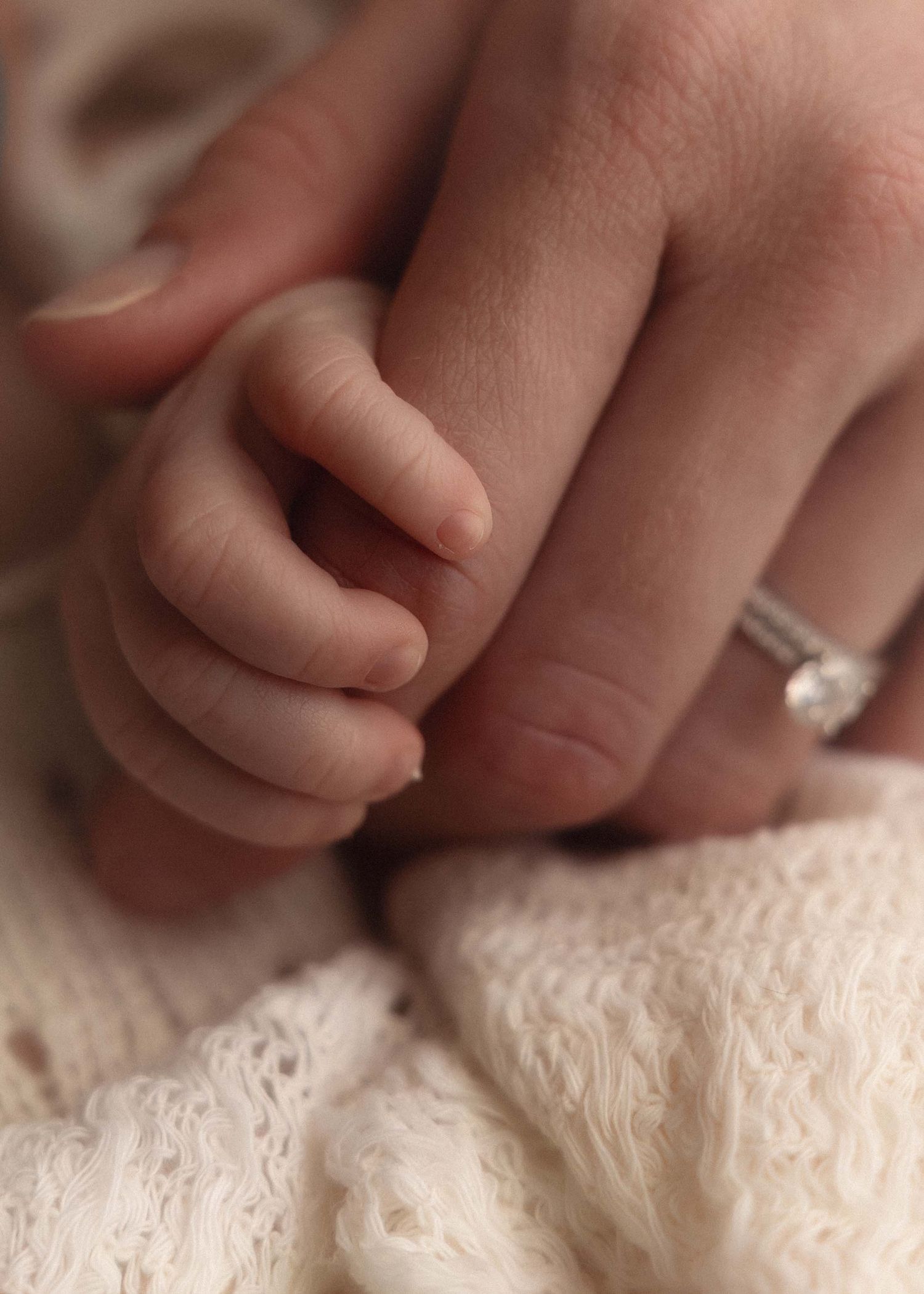
A mother's hand resting over her child's is evidence of connection.
A tiny foot tucked beneath a parent's palm reminds us of just how much growing is still ahead.
The details of a mother holding her baby can tell us something about their relationship without ever showing their faces.
The way a child reaches for a parent's hand.
The way a mother instinctively cups the back of her baby's head.
The way tiny fingers wrap around one much larger one.
These things are ordinary.
And they are extraordinary.
Because they are here for such a short time.
---
We spend so much of life moving quickly past the things that will eventually mean the most.
Maybe photographs give us permission to stop.
To notice the hands.
The wrinkles. The tiny fingers. The familiar gestures.
The softness that won't always be there.
The chubby stages we thought we'd never forget.
The evidence of a life being lived and a love being passed from one generation to another.
Because someday, these details won't be there in quite the same way.
And when that day comes, perhaps what we will treasure most isn't simply the photograph of a beautiful face.
Maybe it will be the little things we almost forgot.
How small their hands really were.
How deeply their feet wrinkled.
How their fingers curled when they slept.
How their hand once disappeared completely inside yours.
The details tell a story.
And sometimes, they are the part of the story we most need to remember.